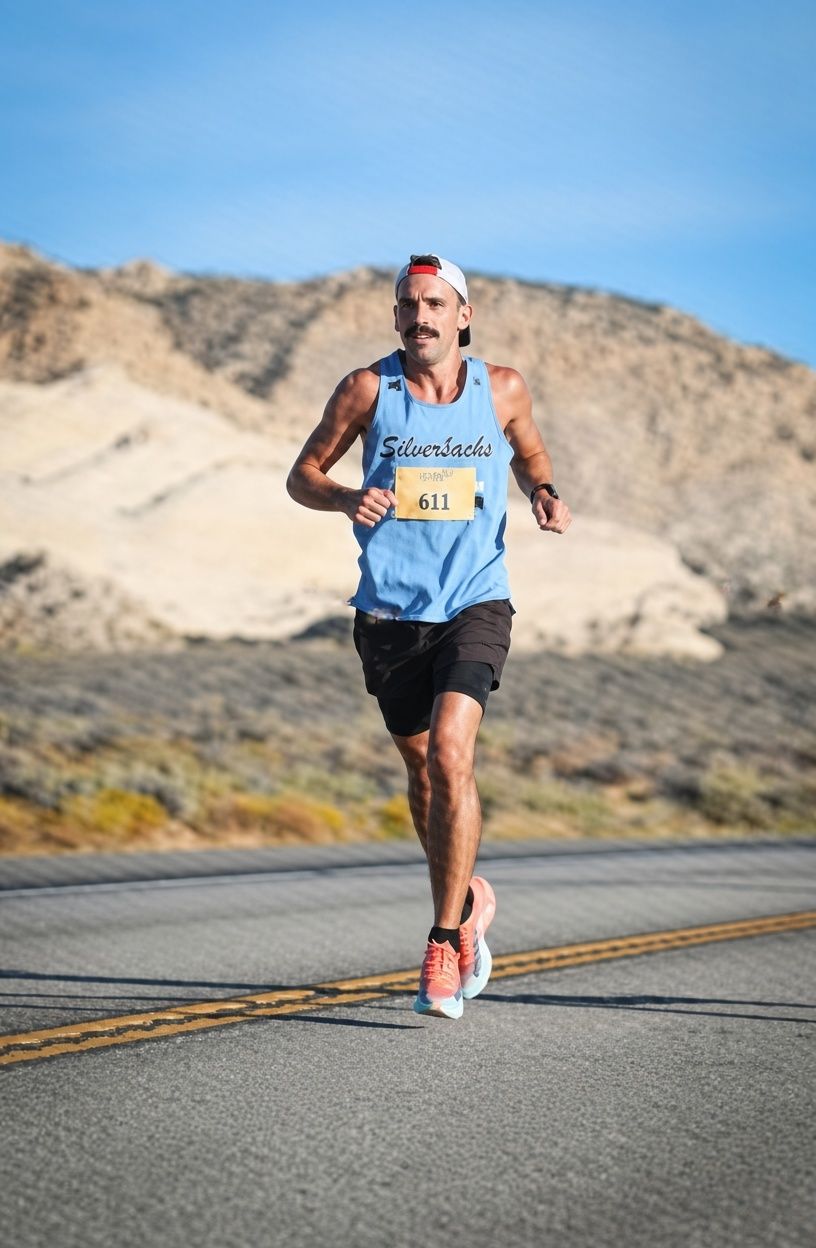
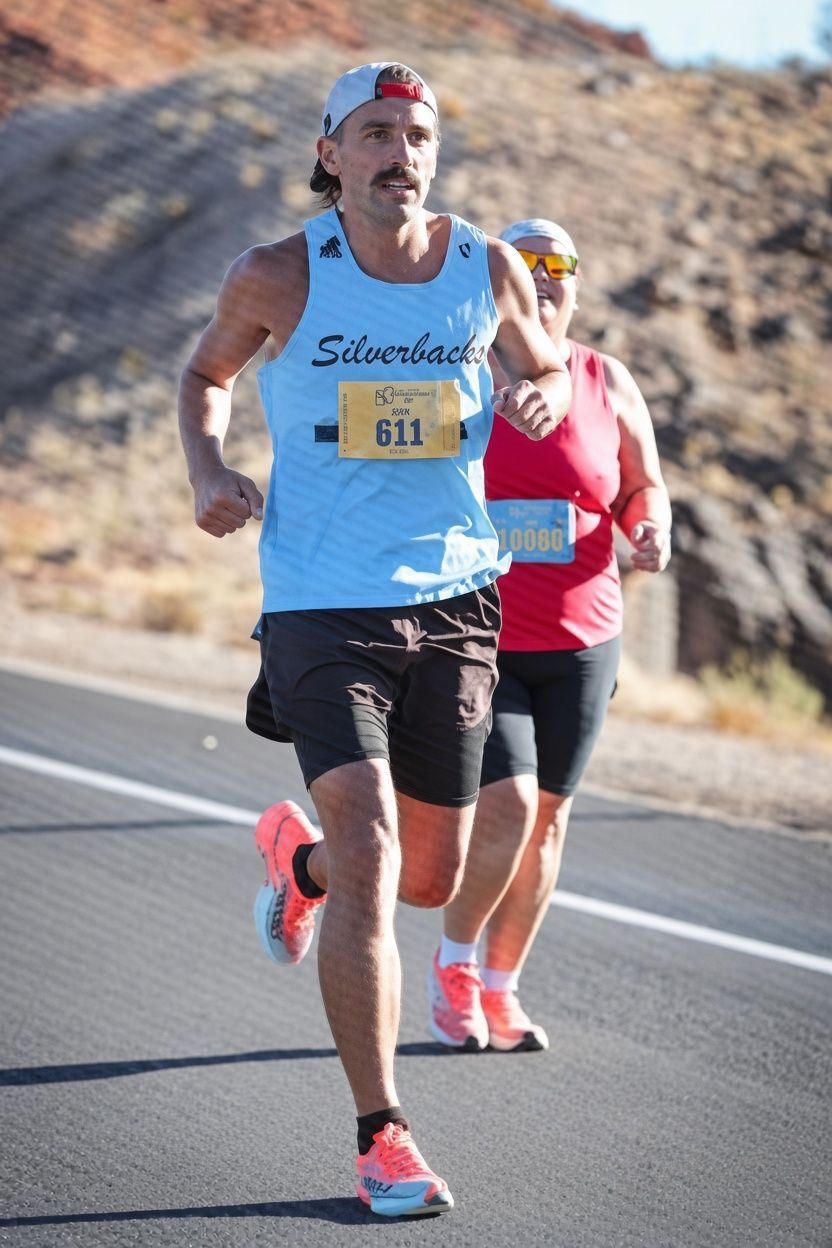
The goal was 6:52 a mile, run evenly, for 26.2 miles on Saturday,
October 3. I was under that for most of the first half. Then my
hamstrings cramped, and the last miles turned into a different race.
I'm happy with the PB. I also know where the other 10 minutes went.
It wasn't my first marathon. It was my best. Last year at St. George my
watch said 3:46:05, so this was about 36 minutes faster.
How it felt
The first 10K felt fast. My heart rate and effort stayed controlled, and
that's the trap. When fast feels easy, it doesn't feel like spending.
It was warmer at the start than I expected. Not terribly hot, just
warmer.
Fueling went the way I planned. I started gels after mile 5, then took
one every 30 minutes after that. I took electrolytes around miles 17 and
21. That's what I did, not a prescription.
My hamstrings didn't give me much warning. Maybe around miles 22 or 23.
When they locked up, I had to stop completely. It hurt badly enough that
I couldn't move. All I could do was stand there and wait for the pain to
pass, then start moving again.
The splits
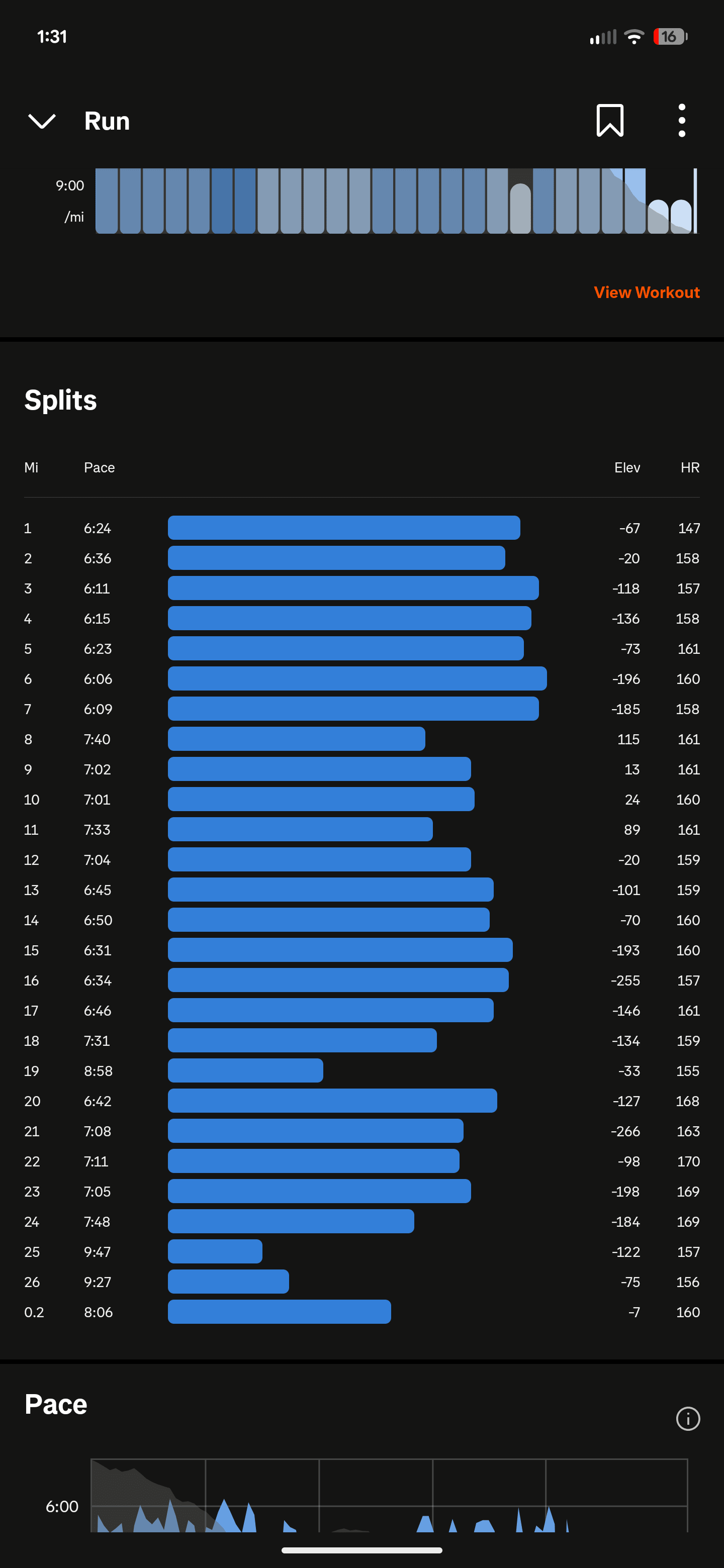
Early miles under sheet pace. 25–26 is the cramp.
Miles 1–7: early spend. 6:24, 6:36, 6:11, 6:15, 6:23,
6:06, 6:09. Sheet pace was 6:52, and every one of those was faster.
Seven miles took 44:04 against a sheet time of 48:04, so I banked four
minutes. St. George runs downhill, so some of that is the course. Some
of it was me.
Mile 8: the hill. 7:40 on the climb around Veyo. That's
the one mile of the early race that ran slower than sheet pace, and it's
supposed to. Through 8 I was still about three minutes ahead.
Miles 9–17: the middle. Everything here landed between
6:31 and 7:33. The slower ones, like 7:33 at mile 11, came on the
climbs. The faster ones came on the downhills. My heart rate stayed
between 157 and 161 the whole stretch, so the effort held steady even
when the pace didn't.
Miles 18–24: the first crack. 7:31 at 18, then 8:58 at
19. Then 6:42 at 20, 7:05 to 7:11 for 21 through 23, and 7:48 at 24.
That 6:42 right after an 8:58 tells me the legs still had speed. My
heart rate hit 168 to 170 from 20 through 22. Right around there, the
hamstrings started talking.
Miles 25–26: the cramp. 9:47 and 9:27, then 8:06 pace
for the last 0.2. Those two miles took 19:14, and that includes standing
still, waiting for my hamstrings to let go. At sheet pace they'd have
taken 13:44.
What held and what died
What held: the fitness. You don't run 6:06 to 6:24 for
seven miles, or 6:42 at mile 20, without it. Twenty miles in, the engine
was still there.
What died: the hamstrings, late. Once they cramped,
pace stopped being a choice.
The honest part: I went out faster than the plan. The
plan said 6:52 and even effort, and I ran 6:06 to 6:36 early. Downhill
helps, but the even part didn't happen.
Late hamstring cramps often come from fatigue plus all the eccentric
load piling up. That's the braking work your legs do on every downhill
step, and St. George has a lot of downhill. Fast early miles down a hill
add to it.
Two things change for the next one. First, more specific strength work. Second, stricter early pacing, so
sheet pace means sheet pace even when the first 10K feels easy.
I trained at about 5,300 feet in Enterprise, and the start is in the
same range. Altitude isn't the story here. Pacing and the last 10K are.
What's next
Next is the Snow Canyon half in November. See races.